
Many women describe this as their baseline. Not a crisis, just a constant. And what's striking is that one of the most effective tools for interrupting that pattern is something you're already doing, right now: breathing.
Breathwork is the intentional practice of controlling your breath to shift your mental, emotional, and physical state. It has roots stretching back thousands of years across yoga, Ayurveda, and traditional Chinese medicine — and it now has a growing body of peer-reviewed research behind it.
This guide covers what breathwork actually is, why it matters specifically for women, four beginner-friendly techniques you can start today, and how to build a sustainable practice safely.
Key Takeaways
- Breathwork activates the parasympathetic nervous system, reducing stress hormones and restoring calm
- Women face unique stress patterns tied to hormonal cycles, caregiving demands, and life transitions that breathwork can directly address
- Four beginner-friendly techniques — diaphragmatic breathing, box breathing, 4-7-8, and alternate nostril breathing — need no equipment or prior experience
- Five minutes of daily practice is enough to start producing measurable changes over weeks
- Not every technique suits every body — start gently and check with a doctor if you have relevant medical conditions
What Is Breathwork and How Does It Work?
Breathwork isn't just "taking a deep breath." It's the conscious, intentional control of your breathing pattern — depth, rate, and rhythm — to produce a specific physical or emotional effect. The distinction matters: in meditation, you observe the breath. In breathwork, you actively change it.
The Nervous System Science
When stress hits, your sympathetic nervous system (the "fight-or-flight" response) activates, flooding your body with cortisol and adrenaline. Your heart rate climbs, your muscles tighten, your thinking narrows.
Slow, intentional breathing reverses this by activating the parasympathetic nervous system — often called "rest-and-digest" — through the vagus nerve, which runs from your brainstem through your chest and abdomen. A slow exhale directly stimulates it, signaling safety to your entire nervous system.
A 2023 meta-analysis of 12 randomized controlled trials found that breathwork was associated with lower self-reported stress and anxiety. The physiological evidence aligns: research on slow breathing and heart rate variability (HRV) links it to improved parasympathetic activity and cardiorespiratory coupling — measurable markers of nervous system regulation.
Breathwork vs. Everything Else
Breathwork sits on a wide spectrum. On one end: simple diaphragmatic breathing, accessible to anyone in any setting. On the other: intensive practices like holotropic breathwork, which can produce powerful emotional releases and carry real safety considerations. This guide focuses entirely on the gentler, beginner-appropriate end of that spectrum.
Here's how that spectrum breaks down:
- Diaphragmatic breathing — slow belly breathing, suitable for any moment of the day
- Box breathing — a structured 4-count technique used for acute stress and focus
- Coherence breathing — paced breathing at roughly 5-6 breaths per minute to balance HRV
- Holotropic breathwork — an intensive, facilitated practice that can produce strong emotional releases; not beginner territory
This guide stays firmly in the first three categories.
Why Breathwork Is Especially Beneficial for Women
The case for breathwork isn't gender-neutral — there are real, documented reasons it's particularly relevant for women.
According to the APA's 2023 Stress in America report, women reported higher average stress than men (5.3 vs. 4.8 out of 10), and were more likely to rate their stress in the 8–10 range. Gallup data shows 51% of U.S. working women reported feeling stressed a lot the previous day, compared to 39% of men.
Hormones, HRV, and the Nervous System
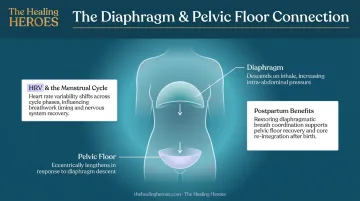
Women's autonomic nervous systems don't operate on a flat line. Research shows that vagally mediated heart rate variability — a key marker of stress resilience — shifts across the menstrual cycle, decreasing from the follicular to the luteal phase. Perimenopausal and postmenopausal women with more intense symptoms show further reductions in HRV, meaning their nervous systems carry heavier physiological load.
Breathwork doesn't fix hormonal fluctuations. But it does give you a tool for navigating them — one that works at any life stage and costs nothing to use.
The Body Connection Women Often Miss
Many women carry tension they aren't consciously aware of. Breathwork builds interoception — awareness of internal body sensations — which supports the ability to identify and release stored emotional tension rather than pushing through it indefinitely.
The diaphragm and pelvic floor also function in synergy. Research confirms that diaphragm training affects pelvic floor strength and endurance, making breathwork particularly relevant for women who have experienced pregnancy, postpartum recovery, or pelvic floor tension.
A Form of Self-Advocacy
Beyond technique, breathwork creates a consistent pause — a moment of self-attunement in the middle of a day spent giving to everyone else. For women who are chronically in "giving mode," that pause is not a luxury. It's a recalibration. Practitioners like Cait DeMello, a confidence coach featured on The Healing Heroes podcast who integrates breathwork into her work with women, describe it as a way to "stay in touch with yourself" — a simple but profound act of self-connection.
Beginner-Friendly Breathwork Techniques for Stress Relief
You don't need to master all four of these. Pick one, practice it consistently for a week, then add more if you want to. That approach will serve you better than sampling all of them once and abandoning the practice.
Diaphragmatic Breathing (Belly Breathing)
This is the starting point for every other breathwork practice — and the technique with the strongest research backing for beginners.
How to do it:
- Sit or lie down comfortably
- Place one hand on your belly, one on your chest
- Inhale slowly through your nose — let your belly expand, not your chest
- Exhale slowly through your nose or mouth
- The hand on your belly should rise and fall; the hand on your chest should stay mostly still
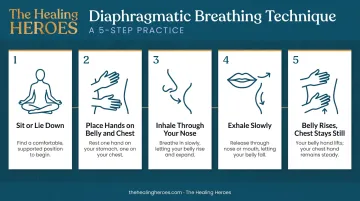
The hand placement isn't just a teaching trick — it gives you real-time feedback on whether you're breathing diaphragmatically. Many people chest-breathe habitually, especially under stress.
Why it works: Diaphragmatic breathing directly activates the vagus nerve, lowers blood pressure, and forms the physiological foundation for every other breathwork technique. A Frontiers in Psychology trial found that diaphragmatic breathing training improved attention, reduced negative affect, and lowered cortisol response to stress — making it one of the most well-supported tools in this guide.
Box Breathing (4-4-4-4)
Box breathing gives your mind something to hold onto when anxiety is spiraling or you need to perform under pressure.
The pattern:
- Inhale for 4 counts
- Hold for 4 counts
- Exhale for 4 counts
- Hold for 4 counts
Repeat for 4–6 cycles.
This technique is used by military personnel and first responders specifically for high-stakes moments requiring rapid composure. It works just as well before a difficult conversation, in a stressful meeting, or at bedtime when your mind won't quiet down.
4-7-8 Breathing
Developed by Dr. Andrew Weil, this technique uses an extended exhale to trigger the relaxation response. The longer you exhale relative to your inhale, the stronger the parasympathetic signal.
The pattern:
- Inhale through your nose for 4 counts
- Hold for 7 counts
- Exhale fully through your mouth for 8 counts
Start with 3–4 cycles. The hold can feel long at first; that's normal.
This technique is particularly well-suited for winding down before sleep or interrupting a spiral of anxious thoughts. A study in healthy adults found 4-7-8 breathing helped improve HRV and blood pressure, particularly in well-rested participants.
Note: The breath hold makes this slightly more advanced than diaphragmatic or box breathing. If you feel dizzy or uncomfortable, reduce the hold count and work up gradually.
Alternate Nostril Breathing (Nadi Shodhana)
This pranayama technique from yoga involves alternating which nostril you breathe through using your thumb and ring finger.
How to do it:
- Sit comfortably with your spine upright
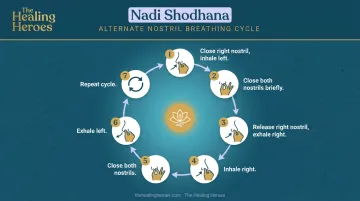
- Close your right nostril with your right thumb; inhale slowly through your left nostril
- Close both nostrils briefly at the top
- Release your thumb and exhale through your right nostril
- Inhale through your right nostril
- Close both; exhale through the left
- That's one cycle — continue for 5–10 rounds
Research using functional near-infrared spectroscopy found uninostril breathing engages frontal brain activity bilaterally. Many practitioners find it particularly useful before public speaking, creative work, or situations where a scattered mind needs to settle.
The research is still emerging — treat this as a calming ritual worth trying rather than a clinically proven tool.
How to Build Your Breathwork Practice from Scratch
The evidence supports starting small. A clinical trial using just five minutes per day of structured breathing over approximately one month found measurable improvements in mood and reduced respiratory rate — comparable in some markers to mindfulness meditation. Consistency matters more than duration.
Practical Setup
- Pick a time and keep it. Morning practice sets a calm baseline for the day; evening practice helps the nervous system downshift before sleep. Either works — what matters is that it's predictable.
- Create minimal conditions. A quiet room, a comfortable seat or lying position, and ideally no screen in front of you. You don't need a dedicated space or special equipment.
- Expect a wandering mind. Thoughts during breathwork are normal. The goal isn't a blank mind — it's a conscious return to the breath each time you drift.
Going Deeper
Apps like Calm or Headspace offer guided breathing sessions that help beginners stay on track, and YouTube has free guided practices for every technique listed here.
If you want to go deeper into how breathwork connects to nervous system healing, somatic work, and emotional recovery, The Healing Heroes podcast covers exactly that. Two episodes worth queuing up:
- "Inhale, Exhale: The Transformative Effects of Breathwork" with somatic therapist Moylan Ryan
- "Transform Your Idea of Self-Worth with Reset Breathwork" with embodiment coach Kate
Both bring practitioner perspectives into the relational and emotional dimensions that technique guides tend to skip.
When Emotions Surface
If tears, anxiety, or unexpected feelings come up during practice, that's not a sign something went wrong. The breath accesses tension the body has stored — sometimes that tension needs somewhere to go. Gentle techniques handled privately are generally fine. If you have a trauma history, consider working with a trained breathwork facilitator before exploring more activating practices on your own.
When to Proceed with Caution: Safety and Contraindications
Gentle breathwork — belly breathing, box breathing — is safe for most healthy adults. But not all breathwork is gentle, and even among gentler techniques, certain conditions require medical consultation first.
Conditions Requiring a Doctor's Clearance Before Starting
- Pregnancy
- Cardiovascular disease or heart conditions
- High blood pressure
- Epilepsy or history of seizures
- Glaucoma
- COPD or chronic respiratory disease
- History of stroke or blood clots
- Aneurysms
The primary concern with breath holds and rapid breathing patterns is their effect on CO2 levels. Hyperventilation can cause respiratory alkalosis, dizziness, and tingling — and in people with absence epilepsy, it can trigger seizures in over 90% of cases. For beginners, slow and controlled breathing (think 4-count inhales, 4-count exhales) keeps these risks off the table.
Breathwork Is Not Therapy
For women managing trauma, PTSD, severe anxiety, or psychiatric conditions, breathwork can be a meaningful supportive practice — but it is not a replacement for professional mental health care. Somatic and gentle breathing approaches are the appropriate starting point for these individuals, ideally introduced alongside a licensed therapist or trained facilitator who can guide you through the experience safely.
If something doesn't feel right — dizziness, tingling, a sense of panic — stop and return to normal breathing. The right breathwork practice is the one your body can stay with. Start slow, check in with a provider if you have any of the conditions listed above, and adjust from there.
Frequently Asked Questions
What is the 4-7-8 breathing technique?
4-7-8 breathing involves inhaling for 4 counts, holding for 7, and exhaling for 8. The extended exhale activates the parasympathetic nervous system, making it useful for winding down before sleep or interrupting anxious thought spirals.
Can women's breathwork help with conditions such as POTS, heart palpitations, and COPD?
Some gentle breathing techniques may provide supportive relief for certain symptoms, but women with POTS, heart palpitations, or COPD should consult their doctor before starting any breathwork practice. Techniques involving breath holds or rapid breathing can be contraindicated for these conditions.
How long should a beginner practice breathwork each day?
Start with five minutes per day. Consistency over time matters more than session length, and most people gradually increase to 10–15 minutes as the practice becomes comfortable and familiar.
Is breathwork the same as meditation?
They're often practiced together, but they're distinct. Meditation typically involves passively observing the breath or thoughts, while breathwork means actively controlling the breath pattern to produce a specific physical or emotional effect.
Can breathwork help with hormonal stress and anxiety in women?
Breathwork activates the vagus nerve and parasympathetic nervous system, which can reduce cortisol and stress hormones. It's a useful tool during hormonally-driven stress spikes tied to PMS, perimenopause, or postpartum adjustment, though it works on the nervous system's response to hormonal shifts rather than the hormones themselves.
Do I need an instructor to start breathwork?
Gentle techniques like belly breathing and box breathing can safely be self-taught using apps, guided videos, or written instructions. For deeper or more activating practices, working with a certified breathwork facilitator is recommended.