

This isn't ingratitude. It's not laziness or burnout — though burnout may be present too. For many driven women, there's something older and quieter underneath: a pattern where worth became inseparable from output long before the first job offer arrived.
This article is for the woman who is excelling by every external measure and struggling in ways she can't quite name. What you're carrying has a name — achievement trauma — and understanding it is the first step toward something genuinely different.
Key Takeaways
- Achievement trauma is a relational wound rooted in conditional worth, not a reaction to career stress
- Burnout and achievement trauma co-exist — but rest alone won't resolve the deeper pattern
- The nervous system stores these early lessons — which is why intellectual reassurance rarely quiets the inner critic
- Online consulting offers driven women consistent, accessible support that fits around their actual lives
- Modalities like EMDR, somatic therapy, and IFS work at the level where achievement trauma actually lives
What Is Achievement Trauma?
More Than Burnout
Achievement trauma takes root when safety, love, or belonging becomes contingent on performance — typically wired in early relational environments where worth was conditional on productivity or excellence.
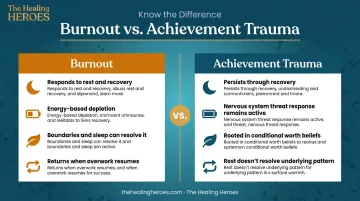
Burnout depletes energy, and rest can address it. Achievement trauma is different: it's a distorted belief system embedded in the nervous system, a pattern where imperfection registers as genuine threat. The two often co-exist, which is why many driven women rest, recover, and return to the same exhausting cycle, baffled that nothing has actually changed.
The difference matters:
- Burnout responds to recovery — sleep, boundaries, time away
- Achievement trauma persists through recovery, because the nervous system threat response remains intact
- Treating one as the other is why so many high-achieving women feel stuck despite doing "all the right things"
Why the Word "Trauma" Applies
No single dramatic event is required. Developmental and relational trauma — a framework well-established in clinical literature — describes the accumulated effect of an environment that consistently required performance in exchange for love or attention.
When a child receives warmth primarily when they succeed, and encounters withdrawal or disappointment when they fall short, they internalize a belief that love has conditions. That belief becomes the architecture of the inner critic.
Why Driven Women Are Especially Vulnerable
The traits that make someone high-achieving — diligence, sensitivity to others' expectations, perfectionism — are often the adaptive strategies a child developed to secure belonging in an environment where falling short felt dangerous. The coping strategy looks like success from the outside, which is what makes it so difficult to identify as a wound.
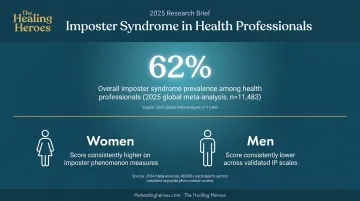
This self-concealing quality shows up in the data. A 2024 meta-analysis of over 40,000 participants found women score consistently higher than men on imposter phenomenon measures, with no evidence the gap is narrowing. And a 2025 global meta-analysis across 11,483 health-service providers estimated overall imposter syndrome prevalence at 62%. For many women, high achievement and persistent internal doubt arrive together — two expressions of the same underlying pattern.
How Achievement Trauma Shows Up in Driven Women
At Work and in Your Career
The productivity spiral is one of the clearest signs: working more and more without experiencing more satisfaction, driven by an undercurrent of fear rather than genuine motivation. Stopping feels more threatening than continuing because rest has become associated with losing value.
Awards, promotions, and recognition produce shorter and shorter windows of relief before the internal voice asks what's next? That's not ingratitude. It's a nervous system conditioned to move the goalpost rather than receive. The accomplishment lands, but the relief doesn't stick.
Imposter syndrome intensifies under these conditions. Even as credentials accumulate, the inner narrator gets louder, not quieter. Achievement trauma drives this: the belief that the next mistake will be the one that finally reveals you as a fraud.
In Your Body and Inner World
The physical signs are real and often overlooked:
- Chronic tension that doesn't resolve between projects
- Fatigue that a full night's sleep doesn't fix
- Gut disturbances or recurring illness during high-stress periods
- Headaches or physical tightening before difficult conversations
These aren't coincidental. Research on adverse childhood experiences consistently links early stress patterns to somatic symptoms and chronic pain complications in adulthood. The body holds what the mind has learned to manage and suppress.
The emotional layer follows the same logic. The pattern often looks like feeling "fine" most of the time, then being completely undone by something disproportionately small: an email that reads as critical, a comment in a meeting, a child's fleeting disappointment. That rupture reflects emotional suppression that has reached its limit, not a character flaw.
The Root: When Performance Becomes Survival
Carl Rogers' concept of conditional positive regard explains the foundation of this pattern precisely. When warmth and connection flow primarily when a child succeeds or complies — and withdraw when they fall short — they internalize that love has conditions. That internalized belief becomes the inner critic's operating system.
This conditioning becomes neurological, not just psychological. Early life stress alters cortisol patterns, stress-response systems, and prefrontal regulation — the brain's circuitry for emotional regulation and self-assessment. This is why driven women can intellectually understand that their worth doesn't depend on output, and still feel genuine panic when imagining actually living that way.
That disconnect isn't a failure of insight. It's stored in the nervous system, which is why insight alone rarely moves it.
The Systemic Layer
That nervous system response doesn't exist in a vacuum. Perfectionism in driven women is also a rational adaptation to a system where the margin for error is genuinely smaller.
Consider what the data shows:
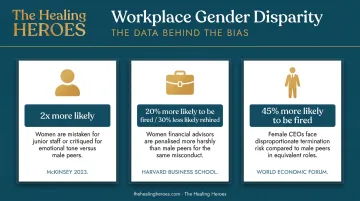
- McKinsey's 2023 Women in the Workplace report found women were twice as likely as men to be mistaken for someone junior or have comments made about their emotional state
- Harvard Business School research on financial advisors found women involved in misconduct were 20% more likely to be fired and 30% less likely to find new employment than men, even when men had higher settlement costs
- Female CEOs were 45% more likely to be fired than male peers, according to a World Economic Forum summary of punishment-gap research
When mistakes carry disproportionate consequences, perfectionism is not a distortion — it's a rational response. Healing achievement trauma doesn't mean ignoring that reality. It means loosening the survival charge around imperfection so that excellence can be chosen freely rather than compelled by fear.
Why Online Consulting Works for Driven Women
The Practical Case
Driven women with packed schedules, geographic constraints, or leadership responsibilities often cannot access consistent in-person support. The commute alone is a barrier. Online consulting removes that friction, offers flexible scheduling, and allows a woman to show up consistently — and consistency is one of the most meaningful predictors of real change.
A 2023 systematic review and meta-analysis of 20 randomized controlled trials found that psychiatric treatment via telemedicine for PTSD, mood disorders, and anxiety was equivalent to in-person care for efficacy, patient satisfaction, and attrition. What drives outcomes is the quality of the relationship and the method — not the physical space.
The Specific Fit for Women with Achievement Trauma
Driven women who have spent careers performing for external eyes often find something unexpected about the online format: the slight distance of a screen can actually lower the threshold for honest engagement in early sessions.
For a woman whose nervous system is primed to present well under observation, being in her own space changes the starting conditions. Several specific factors matter here:
- Privacy — no shared waiting rooms, no risk of running into colleagues
- No performance overhead — no commuting while already depleted, no lobby composure to maintain
- Environmental control — her space, her lighting, her pace before and after sessions
That shift in starting conditions is exactly what the Healing Heroes podcast addresses across modalities — from EMDR and somatic work to breathwork and energy healing. The conversations are designed to help women understand different healing paths through honest expert dialogue before committing to one.
Healing Modalities That Address Achievement Trauma
The most effective approaches for achievement trauma work below the cognitive level — reaching what intellectual insight alone rarely touches.
Evidence-based approaches:
- EMDR reprocesses early experiences stored in the nervous system, reducing their emotional charge without requiring a detailed verbal narrative
- Somatic therapy works directly with the body's held tension, addressing stress patterns that have become physical over years of overdrive
- IFS (Internal Family Systems) identifies the inner parts running on overdrive — the achiever, the inner critic, and the protectors who keep vulnerability at a distance
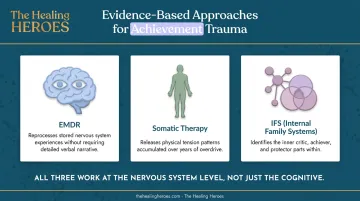
What makes these approaches effective is where they work: not at the level of thoughts, but in the nervous system's threat-response patterns — where conditional worth actually lives.
Complementary approaches:
Many women find that practices like breathwork, acupuncture, and energy healing provide crucial support alongside or between formal sessions. These create a foundation of nervous system regulation that makes deeper trauma work more accessible.
The Healing Heroes podcast features in-depth expert conversations across exactly these modalities — a useful way to understand different approaches and find your entry point before committing to one.
The goal across all of them is the same: helping the nervous system learn that rest is safe, that mistakes are survivable, and that worth doesn't expire when output pauses. Most women find their way in through a combination — and that's exactly how it's meant to work.
How to Begin
The first and often hardest step is recognition, not action. For a driven woman, naming what she's carrying as achievement trauma is not a diagnosis of brokenness — it's a map. If the patterns in this article feel like a description of your experience, that recognition is already meaningful.
What to look for in an online consulting professional:
- Trauma-informed training (not just general wellness certification)
- Specific experience with high-achieving women — not just burnout, but the psychological roots driving it
- Someone who holds both depth and systemic awareness — who can distinguish between a cognitive distortion and a rational adaptation to a genuinely unequal system
Once you know what to look for, the next shift is internal. Driven women often experience the instinct to seek support as weakness or inefficiency — something to push past rather than pursue. Reframe it: consulting is the same category of investment as leadership development or physical health. Healing achievement trauma doesn't reduce ambition. It lets ambition finally serve you, rather than consume you.
Frequently Asked Questions
What is achievement trauma and how is it different from burnout?
Burnout is a depletion state caused by chronic overwork — rest can address it. Achievement trauma is a relational wound rooted in conditional worth that makes burnout likely to return even after rest because the underlying pattern hasn't changed. Both can be present at the same time.
Can you have achievement trauma if your childhood was otherwise happy or stable?
Yes. Achievement trauma doesn't require neglect or overt harm. Consistent environments where praise was tied to performance and withdrawal followed falling short are enough to create conditional worth beliefs, even in warm, functional homes.
How do I know if this is achievement trauma or just normal stress?
If rest doesn't feel restorative, if success brings only brief relief before anxiety returns, or if your sense of worth drops sharply when you make a mistake — those are signals that something deeper than stress alone is driving it.
What healing modalities are most effective for achievement trauma?
EMDR, somatic therapy, and IFS are evidence-based approaches that work at the nervous system level. Complementary practices like breathwork, acupuncture, and energy healing can support regulation and deepen the work.
Is online consulting as effective as in-person support for achievement trauma?
Research supports comparable outcomes for online versus in-person care for trauma and stress-related presentations. For driven women specifically, the accessibility and scheduling flexibility of online formats often produce better real-world consistency.
Where should a driven woman start if she thinks she has achievement trauma?
Start with education — understanding the patterns and their origins. Then seek a trauma-informed professional with specific experience working with high-achieving women. Expert podcast conversations covering different modalities can help clarify which path resonates before you commit.