
Introduction
She's hitting every external marker of success — the career, the responsibilities, the life that looks good from the outside. But privately, she's exhausted, second-guessing herself constantly, and wondering why achieving more hasn't made her feel better.
This is the woman premium mindset consulting is designed for.
Premium women's mindset consulting is a structured, outcome-focused engagement that targets the thought patterns, beliefs, and emotional conditioning shaping how women think, decide, and show up. Unlike therapy (which heals the past) or standard life coaching (which focuses on goals and action steps), it sits at the intersection of both — addressing the full mind-body-spirit picture.
This guide covers:
- What premium mindset consulting actually includes
- Why women benefit from specialized support
- How sessions are structured and what they involve
- What to look for when choosing a consultant
- What to expect from the investment
Key Takeaways
- Premium mindset consulting targets limiting beliefs and emotional patterns — not just goals
- Specialized support matters because women's challenges (imposter syndrome, mental load, identity shifts) require targeted strategies
- Effective packages combine personalized structure, multi-modal depth, and between-session accountability
- Lasting identity-level change typically requires 3–6 months of consistent engagement
- The right consultant creates space that is both challenging and safe
What Is Premium Women's Mindset Consulting?
Mindset consulting helps women identify and shift the thought patterns, beliefs, and emotional responses shaping their behavior and results. The work goes deeper than standard life coaching, which typically stays at the level of goal-setting and accountability, and it's distinct from therapy, which treats clinical mental health conditions. What sits between those two? This.
What Makes It "Premium"
The word gets used loosely, so here's what it actually means in practice:
- Personalized structure — sessions and focus areas built around your specific psychology, not a templated curriculum
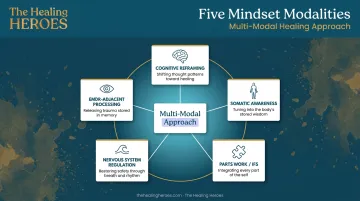
- Multi-modal depth — integration of approaches like cognitive reframing, somatic awareness, parts work (Internal Family Systems concepts), and nervous system regulation
- High-touch support — accountability and access between sessions, not just during them
- Outcome clarity — a defined gap between where you are and where you're going, tracked throughout the engagement
Who It's For
Premium mindset consulting serves women navigating:
- Major transitions (career pivots, relationship changes, motherhood)
- Persistent imposter syndrome or self-doubt despite real external achievement
- Burnout that doesn't resolve with rest
- A sense that external success isn't matching internal fulfillment
- People-pleasing patterns, chronic over-giving, or difficulty holding boundaries
It is not designed for women in active crisis or requiring clinical mental health treatment — for those situations, therapy comes first.
Why Women Need Specialized Mindset Support
Generic coaching frameworks weren't built with women's specific psychology in mind. The challenges women bring to mindset work have roots that generic strategies don't reach.
The Invisible Mental Load
Research from Pew shows that in households where both partners work full time, 52% of couples said the mother handles more parenting tasks — and 81% of full-time working mothers reported managing parenting responsibilities during work hours at least sometimes, compared to significantly lower rates for fathers.
That background cognitive burden — the scheduling, the emotional monitoring, the coordination — depletes exactly the mental resources that growth work requires. A skilled mindset consultant accounts for this reality rather than treating it as a personal failing.
The Imposter Syndrome Gap
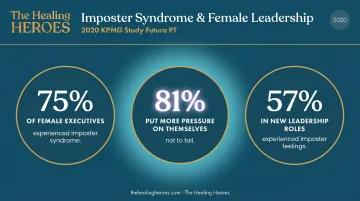
A 2020 KPMG study found **75% of female executives had experienced imposter syndrome**, and 81% said they put more pressure on themselves not to fail than men do. The same study found 57% experienced imposter feelings when taking on new leadership roles.
This isn't a competence problem. It's a conditioning problem that needs to be addressed at the belief level, not just with mindset affirmations.
The Motherhood Penalty
The financial stakes around mindset shifts are real. IWPR data shows employed mothers earned 62.5 cents for every dollar paid to fathers in 2022. Each child under five is projected to reduce a mother's earnings by roughly 15%. For women navigating career re-entry or advocating for their worth after time away, mindset shifts around self-advocacy and worthiness are not abstract — they directly affect financial outcomes.
Identity Fragmentation and Societal Conditioning
From childhood, women absorb messages about being agreeable, self-sacrificing, and contained. That conditioning doesn't disappear with ambition. Standard coaching often misses this layer because it focuses on behavior change without examining the beliefs underneath.
In practice, that conditioning shows up as:
- Perfectionism and chronic over-explaining
- Difficulty receiving help, praise, or recognition
- Persistent guilt unrelated to actual wrongdoing
- Shrinking ambition to avoid appearing "too much"
That same conditioning extends into identity. Women are expected to hold multiple roles simultaneously — professional, caregiver, partner, daughter — and often lose a coherent sense of self in the process. Premium mindset consulting helps a woman reconnect with what she actually values and make decisions from there.
What a Premium Mindset Consulting Package Includes
Session Structure
A premium engagement typically runs 3–6 months with weekly or bi-weekly 1:1 sessions of 60–90 minutes each. Duration isn't arbitrary.
Research on habit formation shows behavioral automaticity averages 66 days, ranging from 18 to 254 days. A 2024 systematic review supports that meaningful habits generally take around two months to begin forming — which is why shorter engagements rarely create the depth of change most women are seeking.
One-off sessions can create awareness. They rarely create lasting change.
Personalized Diagnostics
Premium work begins before the first session, typically with:
- A values mapping process
- A limiting belief inventory
- Clear definition of the gap between current reality and desired state
This intake work keeps sessions targeted from day one.
Modality Integration
The multi-modal approach is what separates premium consulting from standard coaching. Evidence-informed tools commonly drawn on include:
- Cognitive reframing, which identifies and revises distorted or unhelpful thought patterns
- Somatic awareness — reading body-based signals that reflect emotional state
- Parts work (IFS-informed) to address protective and wounded internal patterns
- Nervous system regulation to build capacity for staying grounded under pressure
- EMDR-adjacent processing for clearing emotionally charged beliefs, when the consultant holds specific training and works within defined scope
The Healing Heroes podcast has explored several of these modalities through in-depth expert conversations, including nervous system regulation and body-based healing, giving women an accessible way to understand these approaches before investing in consulting.
Between-Session Support
High-touch support is a core premium differentiator. This might look like:
- Async voice or text check-ins (via platforms like Voxer)
- Personalized reflection prompts
- Action plans tied to each session's insight
- Resource sharing between sessions
The Healing Heroes' own mindset and accountability consulting operates as an "online digital partnership" combining structured video calls with continuous Voxer-based support — a structure that reflects the between-session accountability that prevents clients from reverting to old patterns when real-life pressure hits.
Outcomes to Expect
Well-designed premium packages deliver measurable shifts, not just a general sense of feeling better:
- Decisions made from values rather than fear or obligation
- Reduced rumination and faster recovery from setbacks
- Clearer limits with less guilt
- Stronger professional self-advocacy
- A stable sense of self that holds across life's competing demands
How to Find the Right Women's Mindset Consultant
Credentials and Training
Coaching isn't uniformly regulated, so vetting matters. Look for:
- ICF credentialing — the ACC requires 60+ hours of coaching education and 100+ hours of client experience; the PCC requires 125+ hours of education and 500+ hours of experience; the MCC (the highest level) requires 200+ hours of education and 2,500+ hours of experience
- Specialized training in women's psychology, trauma-informed approaches, or specific modalities like IFS or somatic work
- Scope clarity — if a consultant uses trauma language, EMDR-adjacent techniques, or nervous system work, ask specifically about their training and how they distinguish coaching from clinical care
The ICF's guide for prospective coaching clients recommends asking directly about a coach's experience, credentials, and methodology.
Niche Alignment
A consultant who works specifically with women navigating career transitions will serve a woman at that life stage far better than a generalist. Look for someone whose stated focus mirrors your specific challenge — not just someone who works "with women generally."
Pay attention to language. Does their framing reflect genuine understanding of the conditions women navigate, or surface-level empathy? A few things to listen for:
- Do they name specific challenges women face, or use generic "everyone" language?
- Do they reference real frameworks (IFS, somatic work, nervous system regulation) or stay vague?
- Does their messaging feel lived-in, or like it could describe any coaching practice?
The Discovery Call
Most premium consultants offer a complimentary first conversation. Use it deliberately:
- Ask yourself whether you feel genuinely heard — not just assessed
- Pay attention to whether their questions make you think differently
- Check whether growth feels both possible and safe with this person
That gut-level trust matters more than it might seem. How honest you're willing to be determines how much you'll actually change — and you won't open up to someone you don't trust.
Investment, Timeline, and What to Expect
What It Costs
ICF data puts the average one-hour coaching session at $234 (2025 ICF Global Coaching Study). Premium women's mindset consulting — with its multi-modal depth, between-session support, and specialized focus — typically sits above general coaching benchmarks. Many consultants structure multi-month packages rather than hourly rates, with payment plans commonly available.
Frame this as an ROI conversation: a woman who shifts a deep pattern of undercharging, over-giving, or chronic avoidance often sees that shift affect her income, relationships, and energy in ways that far exceed the cost of the engagement.
Realistic Timeline
Knowing what you're investing makes it worth understanding what the timeline realistically looks like.
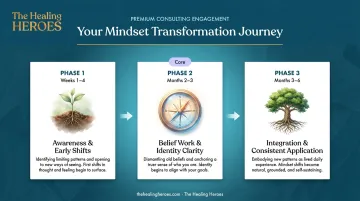
- Weeks 1–4: Increased self-awareness, early pattern recognition, some behavioral shifts
- Months 2–3: Deeper belief work, identity clarity beginning to stabilize
- Months 3–6: Integration, consistent application of new patterns under real-world pressure
Behavioral science consistently shows that new patterns require months of repetition before they become automatic. Anyone promising transformation in 21 days is working against what the research actually shows.
Normal Resistance vs. a Real Problem
Discomfort during mindset work is expected. Resistance, temporary regression, and uncomfortable sessions are signs that real work is happening.
What's worth noticing is different:
- Feeling chronically unseen or misunderstood across multiple sessions
- Sessions that feel stagnant week after week with no movement
- A consultant whose approach consistently misses the specifics of your experience
These signal a fit problem, not a reason to abandon the work entirely.
Frequently Asked Questions
What is typically included in a coaching mindset?
A coaching mindset refers to the practitioner's orientation: a foundational belief in the client's capability, deep listening, and powerful questioning over advice-giving. The ICF defines coaching as "partnering with clients in a thought-provoking and creative process" — meaning the consultant holds the client accountable to their own stated goals rather than directing them toward the coach's preferred outcomes.
What is the 70/30 rule in coaching?
The 70/30 rule describes the ideal session ratio: the client speaks about 70% of the time, processing and problem-solving aloud, while the consultant listens and responds the remaining 30%. ICF guidance supports this approach because insights clients discover themselves tend to stick longer than advice they receive.
How is premium women's mindset consulting different from therapy?
Therapy focuses on healing past wounds and treating mental health conditions. Mindset consulting is forward-focused — it builds on a stable baseline to shift patterns, pursue goals, and grow. For women dealing with active trauma, clinical depression, or anxiety, therapy should come first or alongside consulting.
How long does it take to see results?
Early shifts in awareness often appear within the first few sessions. Lasting change typically requires 3–6 months of consistent engagement, depending on how deeply rooted the pattern is and how actively insights are applied between sessions.
How much does premium women's mindset consulting typically cost?
ICF benchmarks put average hourly session fees around $234. Premium packages with multi-modal depth and between-session support typically run higher than standard coaching rates. Many consultants offer payment plans to make the commitment more accessible.
Can mindset consulting be combined with other healing modalities?
Yes — and often it works better that way. Premium consulting frequently integrates or runs alongside somatic work, EMDR, energy healing, or acupuncture. The Healing Heroes covers this integration territory extensively through podcast conversations with practitioners across disciplines, offering a strong starting point for women exploring how these modalities work together before committing to a consulting engagement.