This guide covers what makes spiritual reading distinct for women, how to identify the themes that matter most right now, curated book recommendations organized by healing need, and how to build a reading practice that creates real change rather than just temporary comfort.
Whether you're in active crisis, quietly curious, or somewhere in the middle of a slow awakening, this is designed to meet you where you are.
Key Takeaways
- The right spiritual book depends on where you are in your healing journey, not what's trending
- The most transformative titles offer frameworks and practices, not just inspiration
- Organizing books by healing need makes it easier to choose what to read next
- Going deep with one book often creates more lasting change than reading many
- Pairing books with podcast episodes or somatic practices deepens what reading starts
What Makes Spiritual Reading Uniquely Powerful for Women
Spiritual reading isn't the same as religious reading, and it's not conventional self-help either. It engages the inner life — identity, meaning, purpose, healing, and the deeper self that exists beneath roles and responsibilities. That difference shapes everything: what you bring to the page and what you take away.
Women have a long, specific relationship with this kind of literature. From 19th-century spiritual autobiographies, where African American women used writing to claim moral authority when public platforms were closed to them, to contemporary feminist theology and embodied wisdom traditions, spiritual books have historically given women a space to name their own experience.
That history isn't incidental. It's why so many women describe feeling seen by a book in a way they rarely feel elsewhere.
What the Research Shows
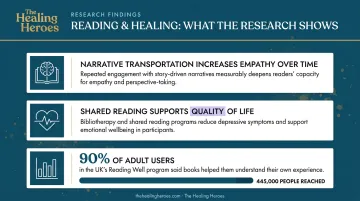
The evidence supports what many readers already sense. A study on fiction and empathy found that narrative transportation — being genuinely absorbed in a text — measurably increases empathy over time. A 2025 scoping review of shared reading research found that structured reading can support quality of life, reduce depressive symptoms, and strengthen personal identity. And the UK's Reading Well Books on Prescription program, which reached 445,000 people between 2013 and 2015, reported that 90% of adult users said books helped them understand their own experience.
Reading, at that level, becomes a healing practice in its own right.
The Unique Intersection for Women
Spiritual books for women specifically address:
- Reclaiming intuition after years of being taught not to trust it
- Healing shame that was absorbed, not earned
- Reconnecting with the body as a source of wisdom rather than a problem
- Living with intention rather than reaction
This goes deeper than productivity or motivation literature. Some women need permission to feel. Others need a framework. Still others need to hear their own inner knowing reflected back — not as a new idea, but as confirmation of what they already sensed was true. This genre is wide enough to hold all of it.
Key Themes in Women's Spiritual Literature
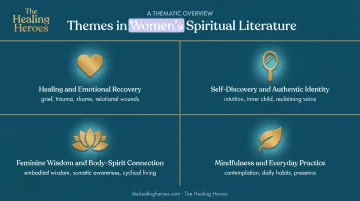
Most books in women's spiritual literature cluster into four themes. Knowing which one fits where you are right now is more useful than any ranked list — and more honest about how healing actually works.
Healing and Emotional Recovery
This is the entry point for many women who wouldn't yet call themselves spiritual. Books in this category address grief, trauma, shame, and relational wounds with both validation and a path forward. They say: you are not alone, and there is a way through. Women often arrive here not looking for spirituality — they're looking for survival — and end up finding something deeper.
Self-Discovery and Authentic Identity
These books help women strip away external expectations and return to themselves. Themes include intuition, inner child work, reclaiming voice, and values-led living. They're especially resonant for women who have spent years performing a version of themselves that no longer fits — and are ready to stop.
Feminine Wisdom and the Body-Spirit Connection
This category treats the body as a spiritual text rather than a problem to manage. Books here draw on embodied wisdom traditions, somatic awareness, and cyclical living — the understanding that women's biology, energy, and spiritual life are interconnected. Research defines somatic awareness as directing attention to interoceptive body experience for self-healing, which is exactly the approach these books take.
Mindfulness, Presence, and Everyday Spiritual Practice
Shorter, more accessible reads that translate spiritual principles into daily habits — mindfulness, loving-kindness, contemplative practice. These work well for busy women who want depth without density, and pair naturally with journaling or meditation.
Must-Read Spiritual Books for Women: A Curated Guide
Rather than ranking these titles, they're organized by the themes above. Start with the theme that most closely matches where you are right now — and know that returning to a section months later, when life looks different, is part of how these books work.
Healing and Emotional Recovery
When Things Fall Apart by Pema Chödrön (1996) — Written by the first American woman to become a fully ordained nun in the Vajrayana tradition, this book meets readers inside the hardest moments rather than offering reassurance from a safe distance. Chödrön teaches that leaning into pain — rather than escaping it — is the path through. Best for: acute grief, loss, or life disruption — when you need a compassionate but unflinching companion.
Rising Strong by Brené Brown (2015) — A #1 New York Times bestseller from a PhD research professor at the University of Houston, this book offers a practical framework for getting back up after failure, heartbreak, or disappointment. It's not about bouncing back — it's about the messy, necessary process of rising. Best for: women who've done some initial healing work and are ready to move forward, not just recover.
You Can Heal Your Life by Louise Hay (1984) — With over 30 million copies sold worldwide, this remains one of the most widely read spiritual books ever written. Hay's central argument — that thought patterns and self-perception shape physical and emotional health — challenged mainstream assumptions when it was published and still resonates for women beginning to examine the connection between their inner life and lived experience.
Self-Discovery and Empowerment
Women Who Run With the Wolves by Clarissa Pinkola Estés, PhD — A layered, myth-rooted exploration of the wild woman archetype, drawing on folklore, fairy tales, and Jungian psychology. This is not a quick read — it's a book women return to for years. Best for: feminine wisdom traditions, storytelling, and reclaiming instinct.
Big Magic by Elizabeth Gilbert (2015) — A Publishers Weekly starred-review title from the bestselling author of Eat, Pray, Love. Gilbert makes a case for creative living as a spiritual practice — pursuing curiosity, releasing outcomes, and treating fear as a companion rather than a gatekeeper. Pick this up when you're stuck at the start of something and need less advice, more permission.
The Dance of the Dissident Daughter by Sue Monk Kidd — A memoir of leaving patriarchal religion and discovering feminine spirituality, described by Publishers Weekly as "well-researched and well-written." Best for: women questioning inherited belief systems and searching for a spiritual home that includes rather than diminishes them.
Feminine Wisdom and Body-Spirit
These two titles sit outside conventional self-help — both make the case that spiritual health and physical health are the same conversation.
Women's Bodies, Women's Wisdom by Christiane Northrup, MD — A board-certified OB/GYN makes the case that women's physical health is inseparable from emotional and spiritual health. Publishers Weekly called it "a practical and empowering guide" connecting psychological conditions to physical experience. Where purely psychological books leave the body out, Northrup brings it back in as central.
Anatomy of the Spirit by Caroline Myss (1996) — From a five-time New York Times bestselling author who writes on consciousness, energy medicine, and medical intuition, this book maps the human energy system across three major spiritual traditions. Publishers Weekly described it as "an engaging volume on spiritual anatomy." It offers an integrated view of health and spiritual identity that sits well outside conventional self-help.
Mindfulness and Everyday Spiritual Practice
| Book | Best For | Pairs Well With |
|---|---|---|
| The Four Agreements by Don Miguel Ruiz (1997) | Women new to spiritual reading; daily practice | Morning journaling, reflection prompts |
| A Path with Heart by Jack Kornfield (1993) | Beginning meditators; contemplative practice | Sitting meditation, breathwork |
The Four Agreements has been published in 52 languages with over 15 million copies sold in the US alone — a New York Times bestseller for more than a decade. Its four principles for living with integrity and awareness are compact and direct, making it one of the most accessible entry points in this list.
A Path with Heart comes from a different depth. Kornfield trained as a Buddhist monk, holds a PhD in clinical psychology, and co-founded the Insight Meditation Society. Thich Nhat Hanh called it "an important guidebook." The book translates serious contemplative practice into language anyone can apply — and works especially well alongside a beginning meditation practice or regular journaling.
How to Choose the Right Book for Where You Are
Before picking a title, it helps to ask a few honest questions:
- Am I in an active healing process, or am I searching for meaning?
- Do I want practical tools, or do I need space to feel something?
- Am I drawn to stories, frameworks, or wisdom traditions?
- What am I avoiding? (That might be exactly where to start.)
Life stage and emotional landscape matter more than most reading lists acknowledge. A woman in acute grief needs different reading than a woman in creative rebirth. A book that transforms one reader can feel entirely irrelevant to someone at a different point on her journey — and that's not a failure of the book or the reader. It's just timing.
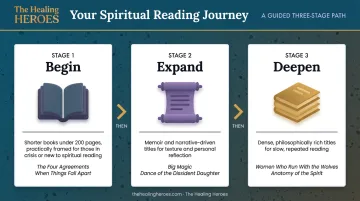
Once you know where you are emotionally, sequencing your reading intentionally makes a real difference. A simple framework:
- Start with shorter, practically-framed books (under 200 pages) if you're new to spiritual reading or in crisis — The Four Agreements or When Things Fall Apart work well here
- Move to memoir and narrative-driven titles (Big Magic, The Dance of the Dissident Daughter) once you want more texture and story
- Save the denser, more philosophically challenging titles (Women Who Run With the Wolves, Anatomy of the Spirit) for when you have space to read slowly and return repeatedly
Bibliotherapy research supports this kind of intentional matching. The ALA defines bibliotherapy as guided reading for therapeutic ends, and studies show that readers who select books based on their current emotional state report stronger resonance and more lasting shifts than those who pick at random.
From the Page to Your Life: Building a Practice Around What You Read
The gap between inspired reading and actual change is integration. Most women who read many spiritual books without lasting impact aren't doing it wrong — they're moving too fast. They're treating books as content to consume rather than ground to work.
Four ways to move insights off the page:
- Journal one key passage per session — write your response to it, not a summary. What did it surface? What resists it?
- Sit with one idea per week Pick a single concept and notice where it shows up in daily life before moving on.
- Read with someone A trusted friend, a book club, or an online community all work. Discussing what you read deepens how it lands and sticks.
- Re-read rather than accumulate because it asks the brain to build meaning rather than just scan for it.
When Books Open Doors That Need a Key
Books raise questions that sometimes need more than another book. That's not a limitation — that's the point. For many women, spiritual reading opens territory that benefits from embodied exploration: somatic work, trauma processing, energy healing, or guidance from someone who has walked similar ground.
The Healing Heroes podcast, hosted by Chandler Stroud, is built for exactly that bridge moment. Episodes feature practitioners across modalities including EMDR, acupuncture, astrology, inner child work, and somatic therapy. These are the kinds of conversations that take what books begin and carry it into lived experience.
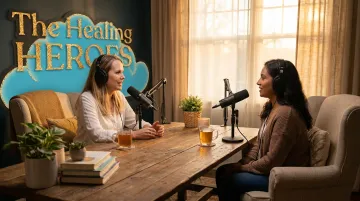
For women ready to go deeper, specific episodes pick up where the page leaves off:
- "Your 'Little t' Traumas Matter, Too" with therapist Jen Baumgold — a natural extension for readers of When Things Fall Apart
- "Learning to Connect with Your Inner Child" with Cait DeMello — a practitioner-led follow-up for anyone working through Women Who Run With the Wolves
Frequently Asked Questions
What is the best spiritual book to read?
There isn't a single best book, because the right choice depends on where you are in your journey. The Four Agreements is an excellent starting point for beginners; Women Who Run With the Wolves is the go-to for women drawn to feminine wisdom traditions. Start with whichever theme feels most alive for you right now.
What are the 7 signs of a spiritual awakening?
Commonly recognized signs include questioning long-held beliefs, heightened emotional sensitivity, a pull toward deeper meaning, feeling out of place in former roles, increased intuition, a desire for solitude, and a sense that something is shifting internally. Spiritual reading can reflect and support this process at any stage.
What are the 3 C's of spirituality?
The three C's most consistently referenced in spiritual care literature are Connection, Contemplation, and Compassion. All three run through the books covered in this guide as both practices and outcomes.
How do I start a spiritual reading practice as a beginner?
Begin with one accessible book that speaks to a current life question — The Four Agreements or When Things Fall Apart are good starting points. Set aside 10 to 15 minutes daily for focused reading, and pair it with a simple habit like writing one insight in a journal after each session. Consistency matters more than duration.
Can spiritual reading replace therapy or professional healing support?
Spiritual books can support your healing process, but they don't replace professional care for trauma, mental health conditions, or deep emotional wounds. The two work well together. If you're in crisis, please reach out to a qualified professional or contact SAMHSA's 24/7 helpline.