
That frustration is pushing more women to ask "why" instead of settling for symptom management. A 2023 KFF survey found 29% of women said a health professional had dismissed their concerns, compared to 21% of men, a gap that helps explain why so many are looking elsewhere for answers. In Norway, one long-running survey tracked women's use of complementary and alternative medicine climbing from 14.5% in 2012 to 35.9% in 2024, a trend that mirrors what's happening across much of the Western world.
This article breaks down what holistic wellness actually means, the five pillars it rests on, and the modalities women are exploring right now, from somatic therapy to human design.
Key Takeaways
- Holistic health connects mind, body, and spirit — not isolated symptoms to fix one by one
- The five pillars (physical, emotional, social, spiritual, environmental) reinforce each other constantly
- Somatic therapy, sound healing, and human design now sit alongside acupuncture and EMDR
- Small, consistent daily habits tend to outlast one-time treatments or quick fixes
What Does It Mean to Be Holistically Well?
Holistic wellness treats a person as one interconnected system, not five separate departments. Your sleep affects your hormones, your hormones affect your mood, and your mood affects your relationships. Nothing operates in a vacuum.
This is the foundation of root cause thinking. Instead of treating fatigue with caffeine or irregular cycles with a pill and moving on, a holistic practitioner asks what's underneath it.
- Is chronic stress suppressing reproductive hormones?
- Is a nutrient deficiency driving low energy?
- Is unresolved grief or anxiety showing up as physical tension?
Research backs part of this connection directly. A peer-reviewed endocrine review found that stress can suppress circulating gonadotropins and gonadal steroid hormones, which can disrupt the menstrual cycle. That's not alternative medicine talk. That's straightforward endocrinology, and it's exactly the kind of connection holistic care is built to catch.
The 5 Pillars of Holistic Wellbeing
These pillars don't operate independently. Improve one, and the others tend to follow.
- Physical: Movement, sleep, and nutrition form the base layer. Skimp on sleep and everything else gets harder to manage.
- Emotional & mental: Stress regulation, therapy, journaling, and mindfulness build self-awareness over time. This pillar is often where the most overlooked symptoms live.
- Social: Relationships aren't a nice-to-have. The U.S. Surgeon General's 2023 advisory found strong social connection is associated with 50% higher odds of survival, while loneliness carries a 26% higher risk of premature death, comparable to other well-known health risks.
- Spiritual: This looks different for everyone, meditation, faith practices, astrology, or quiet time in nature. It's about connection to something bigger than the daily to-do list.
- Environmental: Reducing toxin exposure and building spaces that support rest and calm, rather than adding to sensory overload.
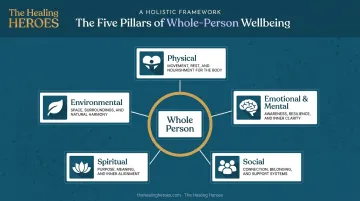
A woman who finally fixes her sleep often notices her mood stabilizes and her cycle regulates too. That's the interdependence in action, not a coincidence.
The Latest Insights: Emerging Holistic Modalities Women Are Turning To
Diet and yoga aren't leaving the conversation, but women are increasingly layering in more targeted, body-based, and self-awareness-focused practices.
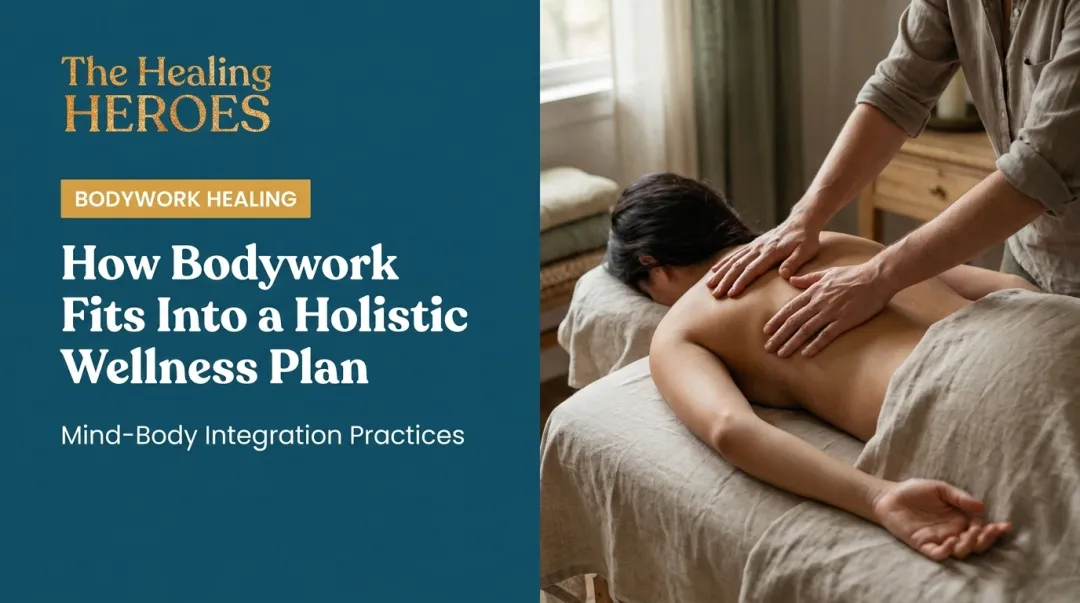
Somatic Therapy and Bodywork
Somatic Experiencing is a body-first approach that works with physical sensation rather than just talk. A 2021 scoping review found 16 peer-reviewed studies on the modality. Only two were randomized controlled trials, meaning the evidence is promising but still developing.
Moylan Ryan, a somatic therapist and certified Rolfer featured on The Healing Heroes podcast, explains this through what he calls psycho-biology: the idea that lasting change has to happen at the level of the body, not just the mind. He describes trauma and stress becoming woven into physical form, often showing up as a "posture of protection," a body's way of guarding itself against past pain.
Rolfing, in his view, works on two levels at once:
- Neural plasticity — reshaping reactive fight-flight-freeze patterns into more grounded responses
- Fascial plasticity — releasing stored tension held in the body's connective tissue
Karen Remele, an MFR (myofascial release) therapist also featured on the podcast, describes a similar pattern in her own practice: physical tension in women often carries emotional and energetic layers, not just mechanical ones. Her work treats the fascia as a place where unresolved stress quite literally gets stuck.
EMDR and Trauma-Informed Therapy
The American Psychological Association conditionally recommends EMDR for adult PTSD, and the World Health Organization includes it among effective psychological treatments.
Jennifer Baumgold, LCSW, an EMDR-certified psychotherapist featured on the podcast, puts it simply: "EMDR makes the trauma a memory and not the sensory body experience." Unprocessed trauma keeps the nervous system reacting as if the event is still happening. EMDR uses bilateral stimulation, like guided eye movements, to help the brain reprocess stuck memories so the emotional and physical charge fades.
Energy and Sound Healing
Sound baths and energy work are increasingly used alongside talk therapy and bodywork. A 2016 observational study of 62 adults found lower tension, anger, and fatigue after a single Tibetan singing-bowl session. Without a control group, though, the findings stay suggestive rather than definitive.
Reiki takes a different evidentiary path. NCCIH defines it as a practice with no proven scientific mechanism, though many practitioners and clients report subjective calm and relief.
Human Design and Astrology as Self-Awareness Tools
These frameworks are showing up less as prediction tools and more as lenses for self-understanding. Pew Research found **35% of U.S. women believe in astrology**, compared to 18% of men, with belief peaking at 43% among women ages 18-49. Human Design has seen a similar surge across social platforms as a self-reflection framework.
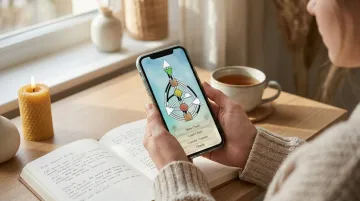
The Healing Heroes podcast brings listeners direct conversations with practitioners across each of these modalities, giving women a starting point for going deeper into whichever path resonates most.
Holistic Approaches to Common Women's Health Concerns
Hormonal Imbalances
Rather than jumping straight to medication, holistic approaches often combine lab testing with targeted nutrition and stress reduction. A meta-analysis of 10 randomized controlled trials involving women with PCOS found omega-3 supplementation shifted certain hormone markers, though results were mixed. Zinc research tells a similar story: symptom improvement in some trials, but no significant change in hormone profiles overall.
Chronic Stress and Burnout
Persistent stress keeps cortisol elevated, and that has downstream effects on reproductive and metabolic function, according to APA research. Breathwork shows a small-to-medium reduction in self-reported stress in a 2023 meta-analysis, while mindfulness practices show modest effects on cortisol markers. Neither is a silver bullet, but both interrupt the stress cycle enough to matter.
Menopause and Perimenopause
Phytoestrogen-rich foods reduced hot flash frequency in a meta-analysis of 15 high-quality RCTs, though they didn't significantly improve broader symptom scores. The Menopause Society's 2023 position statement doesn't currently recommend soy, acupuncture, or mindfulness for vasomotor symptoms specifically, citing insufficient evidence. That doesn't mean these approaches are useless. It means they work best as complements to, not replacements for, conventional care.
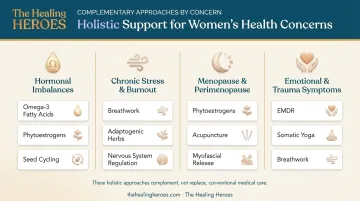
Emotional and Trauma-Related Symptoms
Grief, anxiety, and unresolved trauma routinely show up as physical symptoms:
- Chest tightness
- Fatigue
- Digestive issues
- Sleep disruption
This is exactly why therapies like EMDR and somatic work are increasingly paired with conventional treatment rather than positioned as an alternative to it.
Simple Ways to Start Your Holistic Wellness Journey Today
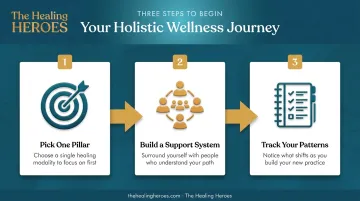
You don't need to overhaul your entire life this week.
- Pick one pillar. Sleep or stress management usually deliver the fastest, most noticeable results.
- Build a support system. Find practitioners, podcasts, or communities that match your specific interest, whether that's somatic work, astrology, or acupuncture. Resources like The Healing Heroes podcast connect you directly with practitioners across these disciplines, so you can hear real conversations before committing to a session.
- Track your patterns. A simple daily note on mood, energy, and symptoms helps surface root-cause patterns before you bring them to any practitioner.
These three steps work together: the pillar gives you focus, the support system gives you guidance, and the tracking gives you evidence of progress. Small, consistent practices built this way tend to outperform occasional intensive treatments, whether you're improving sleep hygiene or processing trauma.
Why Guided Conversations and Community Matter
With dozens of modalities to choose from, holistic healing can feel overwhelming fast. Should you start with EMDR or somatic work? Acupuncture or breathwork? Human design or straightforward journaling?
Trusted, expert-led guidance cuts through that noise. The Healing Heroes podcast exists to fill exactly this gap, hosting honest conversations across disciplines such as:
- Astrology and human design readings
- Acupuncture and traditional Chinese medicine
- EMDR and somatic trauma work
- Energy healing and intuitive guidance
Beyond the episodes, listeners can go deeper through direct-access services, including 1:1 sessions with the practitioners featured on the show.
The podcast has earned multiple Davey Awards across categories like Advice, Interview & Talk Show, and Health & Wellness, recognition that reflects the depth behind these conversations. For anyone standing at the start of their own healing path, unsure which door to open first, it's a grounded place to begin.
Frequently Asked Questions
What does it mean to be holistically well?
Being holistically well means your physical, emotional, social, spiritual, and environmental health are all supported together. It's not just the absence of illness, it's active, ongoing care across every part of your life.
What is holistic women's health?
It's an approach that considers the whole person, including hormones, emotions, lifestyle, and environment, rather than only addressing isolated symptoms as they arise.
What are the 5 pillars of holistic wellbeing?
Physical, emotional, social, spiritual, and environmental. Some frameworks expand this to seven or eight pillars by separating out nutrition, intellectual, or financial wellness.
How is holistic health different from conventional medicine?
Holistic health focuses on root causes and whole-person care, while conventional medicine typically targets specific diagnoses and symptoms. The two work well together rather than in competition.
What are some easy holistic practices to start with?
Sleep hygiene, mindful breathing, or a short daily walk are all solid entry points. Build from there based on what your body and mind seem to need most.
Is holistic wellness backed by science?
Components like stress reduction, sleep, and nutrition have strong research support. Other modalities, like sound healing or human design, are more experiential, and expert-led conversations, like those explored on The Healing Heroes podcast, can help you evaluate what fits. Approach with curiosity and work with qualified practitioners either way.