Most people still picture acupuncture as needles for a bad back. That's a fraction of the story. Acupuncture treats the body as one interconnected system, where a knot in your shoulder might trace back to poor sleep, and anxious thoughts might ease once inflammation calms down.
This guide breaks down how acupuncture actually works, its physical, mental, and emotional effects, and how to structure treatment so it delivers real, lasting change.
Key Takeaways
- Rooted in Traditional Chinese Medicine, acupuncture works by balancing the body's energy flow, or Qi
- Studies link acupuncture to measurable shifts in nervous system activity and inflammation
- Benefits span physical, mental, and emotional health, from pain relief to mood balance
- Best results come from consistent sessions with a licensed practitioner, paired with conventional care
What Is Acupuncture? (Brief Context)
Acupuncture is an ancient Chinese healing practice that uses thin needles inserted at specific points on the body, called acupoints, to restore natural balance.
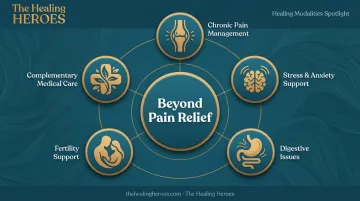
Practitioners use it for far more than pain:
- Chronic pain management (back, joints, migraines)
- Stress, anxiety, and mental health support
- Digestive issues and gut-related discomfort
- Fertility support
- Complementary care alongside conventional medical treatment
Here's the key mindset shift: acupuncture treats the ache as a signal rather than the whole story, working as a tool for restoring systemic balance rather than a one-time fix for an isolated pain point.
The Two Lenses of Acupuncture: Traditional and Modern
In TCM, the body operates on Qi, the vital energy that flows through pathways called meridians. When Qi becomes blocked or imbalanced between yin and yang, TCM theory holds that pain or illness follows. Needles placed at specific points are believed to unblock that flow and restore equilibrium.
Modern science offers a different, complementary explanation. Acupuncture is thought to stimulate the central nervous system, triggering the release of endorphins and other biochemicals that support natural healing.
A 2014 systematic review of 14 randomized controlled trials examining heart rate variability found that acupuncture significantly decreased markers linked to sympathetic nervous system activity in participants with existing health conditions. Effects in healthy participants weren't statistically significant, and researchers described the evidence as only partially supportive, citing small sample sizes as a limiting factor.
That blend of ancient theory and modern data is exactly what makes acupuncture fascinating to study. It's also the kind of bridge explored on The Healing Heroes podcast, where board-certified acupuncturist Jacques Depardieu unpacks how Qi, Chi-gong, and modern clinical practice intersect in real patient care.
Depardieu, who has practiced for over 25 years and taught Chi-gong for more than three decades, puts it simply: "All healing occurs within us and can be activated by a thought, feeling or desire, but acupuncture can facilitate healing without us having to use our thoughts or feelings."
The Three Pillars of Holistic Healing: Key Benefits of Acupuncture
"Holistic effects" means the benefits ripple beyond the treated symptom. A session aimed at back pain might also improve sleep. A session for anxiety might ease digestive tension. These three dimensions, physical, mental, and emotional, are interconnected, so progress in one area often triggers progress in the others.
Physical Benefits
Acupuncture is believed to reduce pain and inflammation by triggering endorphin release and calming an overactive nervous system. The evidence varies by condition and comparison group:
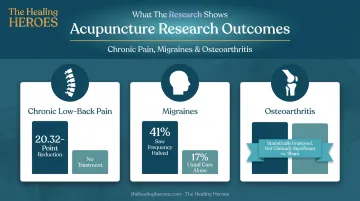
- Chronic low-back pain: A Cochrane review of 33 trials found a 20.32-point pain reduction versus no treatment, though gains shrank against sham acupuncture.
- Migraines: In a review of 22 trials, 41% of participants saw headache frequency cut by half or more with acupuncture added to usual care, versus 17% with usual care alone.
- Osteoarthritis: Short-term pain and function improved statistically, though researchers judged the effect size too small to be clinically meaningful against sham treatment.
Beyond pain, patients frequently report improved sleep quality, smoother digestion, and a steadier immune response. These physical benefits tend to show up most clearly in chronic, long-standing conditions, especially cases where conventional treatment alone has plateaued.
Mental & Cognitive Benefits
Acupuncture is thought to influence the body's stress response system, supporting mental clarity and focus. A 2023 randomized trial of 88 perimenopausal women with generalized anxiety disorder tested this directly.
Manual acupuncture, delivered three times weekly for four weeks, didn't shift cortisol levels compared to placebo needles. It did, however, produce significantly greater improvements in anxiety scores rated by both clinicians and patients themselves.
Translation: acupuncture may not be a cortisol switch, but it does appear to meaningfully ease anxiety symptoms. Patients often describe this as reduced brain fog and better concentration after several consistent sessions. Mental benefits matter most for:
- High-stress lifestyles running on adrenaline
- Anxiety-related sleep disruption
- Cognitive fatigue from chronic overwork
Emotional & Energetic Benefits
In TCM terms, balancing Qi is tied to emotional stability, fewer mood swings, and a deeper sense of inner calm. Many patients describe a "reset" effect after sessions, feeling more grounded and centered, almost like exhaling after holding their breath for months.
Stephanie's story, shared on The Healing Heroes podcast, illustrates this well. After infant loss, fertility struggles, and years of depression left her managing daily panic attacks, yoga and meditation only got her partway there.
She turned to acupuncture with Jacques Depardieu and described it as helping her reconnect with her intuition, finally experiencing real moments of peace in her own body.
Emotional benefits matter most during:
- Major life transitions
- Grief and loss
- Emotional overwhelm that symptom-only treatment doesn't reach
What Happens When Acupuncture Is Used Only for Symptom Relief
Treating acupuncture like a quick fix, one session for one ache, misses its deeper, root-cause value. This narrow approach tends to backfire in predictable ways:
- Inconsistent results: A single session rarely resolves a chronic pattern, so relief feels random rather than reliable
- Recurring symptoms: The original complaint returns because no one addressed the underlying trigger
- Overlooked imbalances: Poor sleep, chronic stress, and nutritional gaps keep feeding the problem in the background
- Disconnected mind-body-spirit: Emotional and spiritual stress often drives the physical symptom, yet it goes unexamined
A root-cause, whole-body view is what separates short-term relief from lasting change. That's the difference between treating a headache and understanding why it keeps showing up every Sunday night.
How to Get the Most Value from Your Acupuncture Treatment
Consistency matters more than any single session. Most licensed practitioners recommend a structured treatment plan, reviewed and adjusted over weeks or months, rather than a one-and-done visit.
Choosing a Qualified Practitioner
Before booking, verify:
- State licensing: Confirm active licensing in your specific state, since requirements vary and no national standard applies.
- Condition-specific experience: Ask directly whether they've treated your particular issue before
- Medical clearance: Consult your primary provider first if you have a pacemaker, are pregnant, or manage a chronic condition. Certain points may affect labor, and electrical stimulation requires added precautions.
Integrating Acupuncture with Conventional Care
Acupuncture works best alongside conventional medicine rather than as a replacement for it. This integrated approach shows particular promise for:
- Chronic pain management alongside physical therapy or medication
- Post-surgical recovery, where studies show acupuncture reduces pain and lowers need for pain medication compared to sham treatment
- Chemotherapy-related nausea, where acupuncture added to standard antiemetic care has shown modest improvements in symptom control
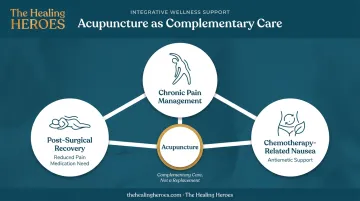
It complements oncology and surgical care rather than replacing them.
Conclusion
Acupuncture's real power lies in treating body, mind, and spirit as one connected system, not in isolated symptom relief for separate problems. The physical, mental, and emotional benefits compound when treatment stays consistent and you're working with the right practitioner.
Curious how this plays out in real patient stories? Explore more conversations on healing modalities like acupuncture on The Healing Heroes podcast, where practitioners such as acupuncturist Jacques Depardieu share firsthand insight into holistic recovery.
Frequently Asked Questions
Is acupuncture a holistic treatment?
Yes. Acupuncture is rooted in holistic medicine because it addresses the whole person's physical, mental, and emotional balance rather than isolating a single symptom.
How does acupuncture heal your body?
Acupuncture stimulates the nervous system and specific points on the body to trigger natural healing responses, including endorphin release, reduced inflammation, improved circulation, and muscle relaxation.
What are the 4 rules of acupuncture?
There's no single official "four rules" doctrine in TCM, but practitioners generally follow: maintaining Qi balance, treating root causes over symptoms, individualizing each treatment plan, and restoring yin-yang harmony.
Does acupuncture hurt?
Needles are extremely thin, and most people feel minimal discomfort. Many describe a mild tingling, pressure, or dull ache rather than actual pain.
How many acupuncture sessions do you need to see results?
Results vary by condition, but many practitioners recommend six to eight sessions over several weeks for noticeable, lasting change. Chronic conditions typically need a longer treatment arc.
Is acupuncture safe to use alongside conventional medicine?
Yes, acupuncture is commonly integrated with conventional care for pain and recovery support. Always consult your healthcare provider first, particularly with pacemakers or pregnancy.