
Introduction
Your brain runs the show, yet most people never think about "brain health" until something feels off. A missed word. A foggy afternoon. A parent's dementia diagnosis that suddenly makes memory lapses feel personal.
The usual advice (do a crossword, take fish oil) treats the brain like an isolated machine with a quick fix. It ignores how sleep, stress, movement, relationships, and even a sense of purpose all shape cognitive resilience over decades.
This guide takes a wider view. We'll walk through nutrition, exercise, sleep, nervous-system regulation, and the often-overlooked pillars of connection and purpose, mirroring the same integrative lens explored across expert conversations on The Healing Heroes podcast.
Key Takeaways
- Brain health depends on physical, mental, emotional, social, and spiritual balance
- Diet, exercise, and sleep matter, but so does regulating your nervous system
- Breathwork, acupuncture, and somatic bodywork complement conventional care
- Small, personalized changes beat drastic overhauls for lasting results
What Does "Holistic Brain Health" Really Mean?
Holistic brain health treats your brain as connected to your whole body, mind, and spirit — not an isolated organ you fix with a single supplement or app. It's a mindset shift as much as a strategy.
The science backing this approach is neuroplasticity: your brain's lifelong ability to adapt, repair, and form new neural connections in response to what you do, eat, feel, and experience. This capacity doesn't switch off after childhood. It responds to how you live at 35, 55, and 85.
Because that plasticity never fully turns off, how you frame the problem matters. A reductionist model asks, "What single thing fixes memory loss?" A holistic model asks a bigger question: how do physical, psychological, social, and spiritual factors interact to either protect or erode cognitive function over time?
That distinction has real weight. The 2024 Lancet Commission found that nearly 45% of dementia cases worldwide are potentially preventable or delayable by addressing 14 modifiable risk factors across a person's life, including hearing loss, physical inactivity, social isolation, and untreated depression.
That statistic doesn't guarantee any one person will avoid decline. But it does confirm something important: lifestyle isn't a footnote to brain health. It's a major lever.
This approach isn't just for people already worried about memory. It's just as relevant to:
- A busy professional dealing with chronic brain fog
- Someone supporting an aging parent through cognitive changes
- Anyone who wants to protect long-term mental sharpness starting now
The Physical Foundations of a Healthy Brain
Nutrition: Feeding Your Brain Right
Your brain makes up roughly 2% of your body weight but consumes about 20% of your body's total energy and oxygen, mostly to keep neurons firing and communicating. Diet quality isn't a minor detail here. It's directly tied to how your brain performs day to day.
Three foods consistently show up in cognitive research:
- Fatty fish (salmon, sardines, mackerel) : rich in omega-3s EPA and DHA, associated with higher cognitive function and slower decline
- Leafy greens (spinach, kale, collards) : packed with folate, lutein, and vitamin K
- Berries and nuts : high in flavonoids and antioxidants linked to slower cognitive aging
One striking data point: in a study of 960 older adults tracked over years, those eating about 1.3 servings of leafy greens daily showed cognitive decline equivalent to being 11 years younger than those who rarely ate them. That's an observational finding, not proof that greens alone stop aging, but it's a meaningful signal.
No single vitamin "repairs" brain cells the way duct tape fixes a leak. Still, a few nutrients matter more than others:
| Nutrient | Role | Supplement evidence |
|---|---|---|
| Vitamin B12 | Supports myelination and nerve signaling | Doesn't improve cognition unless you're deficient |
| Omega-3s (DHA) | Major building block of brain-cell membranes | Trial results mixed for healthy adults |
| Vitamin E | Antioxidant, protects cells from oxidative stress | Most research doesn't support supplements for prevention |
The takeaway: food quality matters far more than any single pill.
Exercise & Movement
Aerobic exercise does something pills can't fully replicate: it increases blood flow to the brain and stimulates neurotrophic factors like BDNF, a protein that supports the growth of new neural connections.
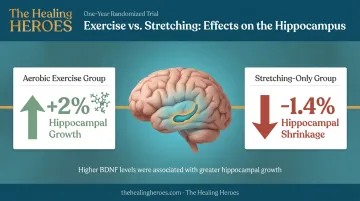
In a year-long randomized trial of 120 older adults, those who did regular aerobic exercise saw their hippocampus, the brain's memory center, grow by roughly 2%. The comparison group, doing only stretching, saw it shrink by about 1.4%. Higher BDNF levels correlated with more hippocampal growth.
Movement doesn't have to mean running marathons. Bodywork and structural therapies can support the nervous system in ways cardio alone doesn't reach.
Moylan Ryan, a Somatic Therapist and Certified Rolfer® featured on The Healing Heroes, describes his Rolfing practice as reshaping both neural and fascial plasticity simultaneously. Releasing tension patterns in connective tissue and retraining nervous-system responses go hand in hand.
Sleep & Recovery
Deep sleep acts as your brain's nightly cleanup shift, clearing out waste while you rest.
During non-REM sleep, your brain's glymphatic system ramps up, flushing out metabolic waste, including beta-amyloid, the protein associated with Alzheimer's. Sleep also plays a central role in consolidating memory, converting short-term experiences into lasting knowledge.
Adults generally need 7-9 hours a night for this process to work well. A few practical habits help:
- Keep a consistent schedule: going to bed and waking at the same time trains your circadian rhythm
- Cut screen exposure before bed: blue light delays melatonin release
- Sleep cool and dark: your body temperature naturally drops to initiate deep sleep
Mind-Body & Energetic Practices for Cognitive Resilience
Meditation, Breathwork & Somatic Practices
Chronic stress isn't just uncomfortable. It has measurable effects on brain structure. Research on thousands of dementia-free adults has linked higher cortisol levels to smaller brain volume and weaker memory performance over time. These are associations, not proof of direct cause, but the pattern shows up consistently enough to take seriously.
Mindfulness practices counteract this by activating the parasympathetic nervous system (your body's rest-and-recover mode). Moylan Ryan's work extends this idea through NeuroDynamic Breathwork, a practice rooted in holotropic breathing traditions. During sessions, he describes participants moving from a contracted, withdrawn state into what he calls an "upflow" of expansion.
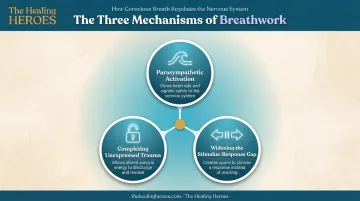
Key mechanisms he points to:
- Parasympathetic activation: calming an overactive fight-or-flight response
- Completing unexpressed trauma: releasing physical imprints of past stress stored in the body
- Widening the stimulus-response gap: creating space between a trigger and your reaction, rather than reacting automatically
That gap matters more than it sounds. It's the difference between reacting on autopilot and responding with intention, a shift that changes how your nervous system handles daily stress long after the session ends.
Acupuncture, Energy Work & Traditional Modalities
Traditional Chinese medicine views the nervous system through a different lens than Western neurology. Jacques Depardieu, a nationally board-certified acupuncturist and herbalist with over 25 years of practice and three decades as a Qigong teacher, approaches recovery through the connection between spirit, creativity, and nervous system balance. His clinical philosophy treats mental sharpness and emotional vitality as interconnected, not separate systems to treat individually.
Other modalities focus on relaxation as a gateway to nervous-system regulation. Nicole Kim, who practices yoga, Thai bodywork, and sound healing, describes weaving these techniques into what she calls "a harmonious tapestry" designed to restore balance in both body and spirit. Sound frequencies and energy work won't replace clinical treatment, but they can lower stress in ways that indirectly support cognitive function.
These approaches work best alongside evidence-based medical care, not instead of it.
The Overlooked Pillars: Social Connection, Stress & Purpose
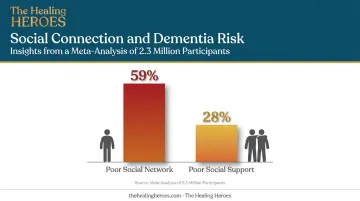
Loneliness doesn't just feel bad. It's a measurable risk factor. A meta-analysis spanning 33 studies and more than 2.3 million participants found that people with poor social networks had a 59% higher risk of dementia compared to those with strong social ties. Poor social support carried a 28% higher risk.
Social isolation isn't the only strain on the brain. Chronic stress compounds the damage in similar ways, but simple, low-cost practices can reduce its neurological toll:
- Journaling to process emotions instead of suppressing them
- Gratitude practices to shift attention away from threat-focused thinking
- Time in nature to lower cortisol naturally
- Therapy for structured, professional support
Purpose matters too, particularly during grief, trauma recovery, or major life transitions. Whether that comes from faith, creative work, or community involvement, having a reason to get up each morning appears to buffer emotional resilience — and that resilience is inseparable from brain health.
Building Your Personal Holistic Brain Health Plan
Don't overhaul your entire life this weekend. Pick one or two changes and build from there:
- Start small: a daily 20-minute walk or a slightly earlier bedtime
- Track what helps: genetics, history, and lifestyle vary, so note energy, mood, and focus over a few weeks
- Layer in complementary practices: breathwork, acupuncture, or somatic bodywork once your foundation feels steady
Curious about a specific modality before committing? Practitioners like Moylan Ryan cover breathwork and Rolfing, while Cait DeMello explores embodiment and intuitive practices. Both are featured on The Healing Heroes podcast, offering a grounded starting point for understanding what each approach involves before you try it yourself.
Frequently Asked Questions
What are the holistic treatments for brain health?
Holistic brain health spans nutrition, exercise, sleep, stress management, mind-body practices like meditation or breathwork, and complementary modalities such as acupuncture or bodywork. Together, they treat the whole person rather than isolated symptoms.
What are the three superfoods for brain health?
Fatty fish (omega-3s), leafy greens (folate, lutein, vitamin K), and berries or nuts (flavonoids and antioxidants) show the strongest research support for slowing cognitive decline.
What vitamin repairs brain cells?
No single vitamin fully repairs brain cells. B12 supports nerve myelination, and omega-3s build brain-cell membranes, but they support function rather than reversing existing damage.
Can chronic stress really shrink your brain?
Research links prolonged high cortisol to smaller brain volume and weaker memory in some studies, though these are associations, not proof of causation. Either way, stress management remains a core pillar of brain health.
How much sleep do adults need for optimal brain health?
Most adults need 7-9 hours nightly. This window supports memory consolidation and allows the glymphatic system to clear metabolic waste from the brain.
Are supplements necessary for brain health, or is diet alone enough?
Whole foods should be your foundation. Supplements may fill specific nutrient gaps, but they can't replace a varied diet. Talk to a healthcare provider before starting any regimen.