
Natural approaches aren't a replacement for medical care. But for mild to moderate depression, they can be a powerful addition to a treatment plan, and research shows 54% of women with depression have used some form of complementary therapy in the past year.
This guide walks through the lifestyle habits, mind-body-spirit practices, and supplements with the strongest evidence behind them, plus how to combine them safely into a plan that actually fits your life.
Key Takeaways
- Combining nutrition, movement, sleep, and mind-body practices delivers more lasting relief than any single fix
- Supplements ease mild-to-moderate symptoms but carry real interaction risks with prescription antidepressants
- Somatic therapy, EMDR, and acupuncture engage the nervous system in ways medication doesn't reach
- Professional support becomes essential when symptoms are severe, persistent, or involve self-harm thoughts
Why a Holistic Approach Works for Depression
Depression doesn't operate through one broken pathway. It disrupts sleep architecture, dysregulates the stress response, drives inflammation, and erodes social connection, often all at once. Treating just one piece rarely resolves the whole picture.
This is exactly why layering strategies tends to outperform relying on a single intervention. It's also why complementary approaches have become so common alongside standard care rather than replacing it.
Inflammation deserves particular attention here. Researchers increasingly view depression as having an inflammatory component, at least for some people. One systematic review of treatment-resistant depression found elevated CRP levels above 3 mg/L in roughly 45% of patients who hadn't responded to conventional antidepressants, pointing to an inflammatory subtype rather than a universal cause.
What does this mean practically? A few things:
- Diet, exercise, and stress management can directly lower inflammatory markers like CRP and IL-6
- These same strategies support neuroplasticity and stress regulation, not just mood in the moment
- Combining approaches that hit inflammation, circadian rhythm, and nervous system regulation simultaneously tends to produce more durable results than any single lever pulled alone
None of this means natural strategies work for everyone or replace clinical care. It means the body's systems are interconnected, so treatment that respects that tends to go further.
Foundational Lifestyle Medicine for Depression
Before reaching for supplements or specialized therapies, the daily habits below have some of the strongest research behind them. They're not glamorous, but they change brain chemistry and lower inflammation over weeks, not overnight.
Anti-Inflammatory, Brain-Healthy Nutrition
Mediterranean and Japanese-style eating patterns, both rich in fish, vegetables, whole grains, and fermented foods, are consistently linked to lower depression risk.
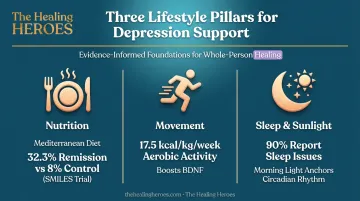
The strongest evidence comes from the SMILES trial, a 12-week study where adjunctive dietary support led to 32.3% remission in participants with moderate-to-severe depression, compared to just 8.0% in a social-support control group. A separate meta-analysis of 1,507 participants found a meaningful pooled reduction in depressive symptoms from Mediterranean-diet interventions.
Why would food matter this much? It comes down to the gut-brain axis:
- Gut bacteria influence tryptophan metabolism and immune signaling that affect mood
- Butyrate-producing bacteria like Faecalibacterium are often reduced in people with depression
- Butyrate may lower inflammatory NF-kappa-B signaling and support brain-derived neurotrophic factor (BDNF), though much of this evidence is still preclinical
Foods worth limiting include ultra-processed items, added sugar, and red or processed meat. A meta-analysis found sugar intake linked to a 21% higher depression risk, and processed meat carries a smaller but measurable association. None of these studies prove causation, but the pattern is consistent enough to take seriously.
Movement as Medicine
Diet sets the stage for these changes, but movement builds on it directly. Exercise is one of the best-studied natural interventions for depression, and the dose matters more than most people assume.
A landmark trial found that 17.5 kcal/kg/week of aerobic activity, split across 3 to 5 sessions weekly for 12 weeks, meaningfully reduced symptoms in adults with mild-to-moderate depression. A larger network meta-analysis of 218 studies and over 14,000 participants found walking or jogging produced the strongest effect, followed by yoga and strength training.
The mechanism runs two tracks. Acutely, exercise boosts endogenous opioids and mood-related signaling.
Over weeks, repeated activity raises BDNF, supports hippocampal neurogenesis, and improves stress regulation. Most people notice shifts within a few weeks, though studied programs commonly run 8 to 16 weeks for full benefit.
Sleep & Sunlight Regulation
Nutrition and movement shift brain chemistry during the day, but sleep and light exposure decide whether those gains stick overnight. About 90% of people with depression report sleep problems, and insomnia often precedes the depressive episode rather than just following it. The relationship runs both directions, which makes sleep a genuine lever, not just a symptom to manage.
Circadian disruption affects the timing and amplitude of mood-regulating systems. Morning sunlight exposure helps anchor the internal clock and suppress melatonin at the right times, supporting more stable mood across the day.
One important caveat: a large VITAL-DEP trial following over 18,000 adults for a median of 5.3 years found that vitamin D supplementation did not reduce depression risk or improve mood scores. Sunlight likely helps mood through circadian pathways independent of vitamin D, not because of it.
Mind-Body-Spirit Healing Modalities
Because depression affects the nervous system as much as it affects thought patterns, practices that work directly with stored stress and physiological regulation can complement talk therapy in ways medication alone doesn't reach. This is territory The Healing Heroes podcast explores often, through conversations with practitioners across these exact disciplines.
Meditation, Mindfulness & Breathwork
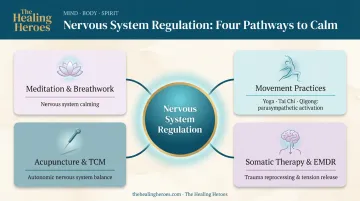
Mindfulness-based approaches generally outperform no treatment for depression, according to a review from the National Center for Complementary and Integrative Health. An 8-week mindfulness-based stress reduction program showed measurable symptom reduction, though comparisons against active treatments like medication remain less consistent.
Breathwork deserves its own mention. Somatic therapist Moylan Ryan, a Certified Rolfer® featured on The Healing Heroes, uses NeuroDynamic Breathwork. He turns to it specifically because it bypasses the cognitive mind and works at a physiological level, which matters when trauma or chronic stress sits underneath the depression.
Movement-Based Practices: Yoga, Tai Chi & Qigong
Mindful movement combines the antidepressant effects of exercise with direct nervous system regulation. A meta-analysis of 24 randomized trials found yoga reduced depression severity with a moderate effect size, and increased remission rates versus passive controls. Qigong studies report similar reductions, with researchers proposing increased parasympathetic activity as one driver.
These practices don't require athletic ability. Slow, breath-linked movement seems to be doing much of the work, which is worth knowing if intense exercise feels out of reach during a depressive episode.
Acupuncture & Traditional Chinese Medicine
Acupuncture is believed to influence central autonomic networks, shifting the balance between sympathetic and parasympathetic activity and engaging vagal pathways. Much of this evidence comes from physiological research rather than large-scale human trials, so it's promising but not definitive.
Results tend to be cumulative. Many depression trials use protocols of 30-minute sessions, several times weekly, over 6 weeks. Practitioners like Jacques Depardieu, a nationally board-certified acupuncturist with 25-plus years of clinical experience, often describe this as consistent with how the practice was designed to work: gradually, not instantly.
Somatic Therapy, EMDR & Energy Healing
Trauma and chronic stress don't always stay in memory. They can become stored in the body as tension patterns, guarding, or a nervous system stuck in fight, flight, or freeze. When depression has a trauma component, cognitive approaches alone sometimes fall short.
- EMDR uses bilateral stimulation, like guided eye movements, to help reprocess traumatic memories so they become less emotionally charged
- Somatic release (including Rolfing and movement education) works through the fascial system and embodied movement to shift stored physical patterns
- Energy or sound healing aims to support nervous system regulation through non-verbal, body-based means
Psychotherapist Jennifer Baumgold, LCSW, a certified EMDR practitioner featured repeatedly on The Healing Heroes, emphasizes resourcing as a foundational step before deeper trauma work begins, building internal calm before processing difficult material. The podcast's interviews with practitioners like Baumgold, Moylan Ryan, and yoga and sound healing practitioner Nicole Kim give listeners an accessible way to understand these approaches before deciding whether to try them.
Natural Supplements & Herbal Remedies
Several supplements have research behind them for depression, though the evidence quality varies widely.
| Supplement | What research shows | Key risk |
|---|---|---|
| St. John's Wort | Mixed evidence for mild-to-moderate depression; no benefit shown for moderate major depression in NCCIH-funded trials | Can trigger serotonin syndrome with SSRIs; reduces effectiveness of birth control and other medications |
| SAMe | Current research doesn't clearly support its use for depression | Reported mania/hypomania risk, especially in bipolar disorder |
| Omega-3s | Small adjunctive benefit in some meta-analyses; effect size modest | High doses may affect bleeding time |
| Saffron | Small trials (30mg/day, 6-8 weeks) show improvement versus placebo | Nausea, drowsiness; limited long-term safety data |
| 5-HTP | Only 2 rigorous trials exist; results favor 5-HTP over placebo but evidence is thin | Documented serotonin syndrome case when combined with sertraline |
The critical caution: the FDA does not approve supplements for safety and effectiveness before they reach the shelf. Manufacturers, not regulators, are responsible for that.
Before starting any supplement, especially alongside a prescription antidepressant:
- Talk to your healthcare provider first, even for "natural" options
- Recognize serotonin syndrome symptoms: agitation, rapid heartbeat, fever, confusion
- Understand these are documented, real risks, not rare edge cases
Building Your Personalized, Integrative Plan
The most effective holistic plans don't try everything at once. They combine two or three modalities that fit your symptoms, your schedule, and what actually feels sustainable.
A reasonable starting point might look like:
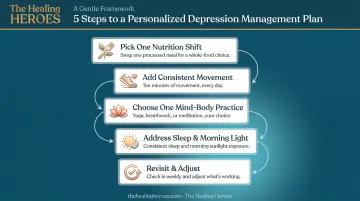
- Pick one nutrition shift: adding fish and vegetables a few times a week, rather than overhauling your entire diet
- Add consistent movement: even 20 minutes, three times weekly, based on the research-backed dose
- Choose one mind-body practice: yoga, breathwork, or acupuncture, based on what you're drawn to
- Address sleep and morning light exposure as a daily anchor
- Revisit and adjust every few weeks rather than expecting immediate results
Know when natural approaches aren't enough. If symptoms are worsening, persisting despite consistent effort, or involve any thoughts of self-harm, that's a signal to seek professional help immediately.
The 988 Suicide and Crisis Lifeline is free, confidential, and available 24/7 by calling or texting 988. You don't need to be in active crisis to reach out.
As you continue building and adjusting your plan, ongoing education helps you choose wisely. Resources like The Healing Heroes podcast can serve as a companion in that process, offering honest, expert-led conversations across dozens of healing paths so you can understand a modality before committing time or money to it.
Frequently Asked Questions
What is the best holistic approach to depression?
There's no single best approach. The most effective plans combine nutrition, movement, sleep, and one mind-body practice suited to your preferences, ideally alongside professional support.
What not to say to a depressed person?
Avoid phrases like "just snap out of it" or "others have it worse." These minimize the experience. Validating what someone is going through matters far more than offering a quick fix.
Can natural treatments replace antidepressant medication?
No. Natural approaches can complement mild-to-moderate depression care, but they should never replace, start, or stop antidepressant medication without medical guidance.
How long does it take to see results from natural depression treatments?
Most lifestyle and supplement approaches take several weeks of consistent use before noticeable improvement. This isn't the temporary lift you get from a single workout.
Are supplements like St. John's Wort safe to take with antidepressants?
No, not without medical supervision. Combining them can trigger serotonin syndrome, a potentially serious reaction. Always consult a doctor first.
Can exercise alone be enough to treat depression?
Exercise offers real, evidence-backed relief for mild-to-moderate symptoms. It tends to work best, though, combined with other lifestyle habits and therapeutic support rather than as a standalone fix.